


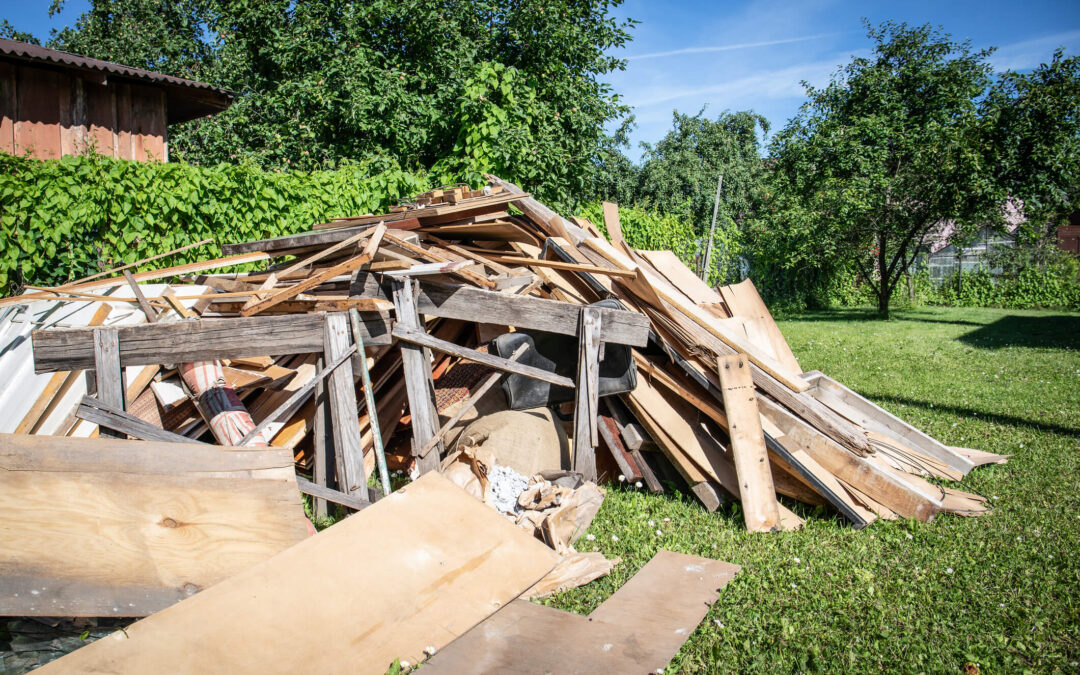
The National Weather Service says Santa Ana winds are most common in the cooler months, from September through May, and that they can cause major property damage. Old fences take the hit. Posts rot at the soil line for years, and one dry, gusty night lays a whole run of panels across the side yard. Fence removal comes before any rebuild, and the debris has to go somewhere a curbside cart can’t take it. BG’s Big Box Service drops roll-off containers across the San Fernando Valley from its Sun Valley yard. Don’t wait long. A gap in the property line is an open gate for the dog and the neighbor’s kids.
Quick Summary: Key Takeaways
- Pickets and rails: untreated or painted boards load into a standard roll-off.
- Pressure-treated posts: California handles them as treated wood waste, so they stay out of the bin.
- Size by the run: a 3-yard for a short section, the Lowboy 20 for a full perimeter.
- Order of work: bin first, tear-out second, new fence last.
Fence Removal Debris Splits Into Two Piles First
A wood fence comes apart into two piles. A typical backyard fence is redwood or cedar pickets nailed to horizontal rails, hung on posts sunk into the ground.
California’s toxics regulator doesn’t count painted natural wood as treated, so a picket stays ordinary lumber under its coat of paint. The posts are a different story. Ground contact is exactly where builders reach for chemically treated lumber, and that one detail decides where each piece ends up after the tear-out.
Sort as you pull.
→ residential roll-off rentals
Pressure-Treated Posts Stay Out of the Roll-Off
Treated posts need their own disposal route, separate from the dumpster. The Department of Toxic Substances Control (DTSC) is direct about it: its September 2021 treated wood waste fact sheet says households typically generate this waste when a fence or deck is replaced. It tells them to keep it segregated from other materials, store less than 1,000 pounds of it for no more than 30 days after removal, and take it to an authorized treated-wood facility.
How do you spot one? Look for an end tag, a stamped code, rows of small indentations, a green or dark-brown tint, or staining that shows only around the edge of a fresh cut. Leave any tag or stamp in place; DTSC tells households not to remove them. BG’s own landscaping guidance lists chemically treated wood among the things a container can’t take.
If a post comes up with its concrete collar still on, knock the collar free and keep it apart from the boards; BG’s 10-yarder is the box built for concrete.
→ landscaping clean-up with a dumpster
The Length of the Run Picks the Container
Short sections fit the 3-yard, and a whole perimeter needs the Lowboy 20. Volume decides, and so does length.
The 3-yard box measures 4 by 4 by 6 feet, about a mid-size pickup bed. It takes a blown-out section between two houses or a leaning gate, as long as the 8-foot rails are cut down to fit a 6-foot box. A whole backyard line is too much for it.
Step up. The Lowboy 20 runs 18 feet long, and its two rear doors swing open, so rails and whole panel sections slide in flat instead of being lifted over a 4-foot wall and tossed. Stack the pickets the same direction, because crossed boards trap air and fill a box far faster than they should.
Foothill Lots Bring Brush Down With the Fence
Along the Valley’s northern and eastern foothills, a fallen fence rarely comes out alone. In Sunland-Tujunga, Lake View Terrace and the slopes above Sylmar, bougainvillea, ivy and dead shrubs grow straight through the old boards, and when the panels drop, the vegetation comes with them.
That tangle is green waste. Clean branches and clippings can share a residential bin with the boards, and a big pile of brush is worth asking about a separate green-waste container. Strip the vines before you stack. A wad of ivy wrapped around a picket section won’t lie flat, and on a canyon lot where the next Santa Ana is only a forecast away, the dry growth along the old fence line is the part you most want gone.
→ brush clearance dumpster guide
Book the Bin Before the Fence Crew Arrives
Get the container on site first, then tear out, then build. Fence contractors want a clean line to survey and dig, and a pile of rotten panels slows them down and gets in the way of the new post holes.
Plan the drop where the truck can reach and the crew can wheel debris to the open doors without crossing the neighbor’s lawn. BG’s covers the whole Valley, from Chatsworth and Woodland Hills on the west side to Burbank and Sun Valley on the east, so the bin rarely has far to travel. One more thing. Pull the old fence before the new materials are delivered, or you’ll be stacking fresh lumber on top of the waste.
→ dumpster delivery across the San Fernando Valley
Frequently Asked Questions
Q: How do I get rid of an old wood fence?
A: Separate it first. Untreated or painted pickets and rails go into a roll-off dumpster with other lumber, while pressure-treated posts go to an authorized treated-wood facility.
Q: Can pressure-treated wood go in a dumpster in California?
A: Not with ordinary debris. DTSC’s household rules for treated wood waste call for keeping it segregated, storing less than 1,000 pounds for no more than 30 days, and taking it to an authorized facility, and it can’t be burned, chipped, ground or mulched.
Q: What size dumpster do I need for fence removal?
A: It depends on how much fence is coming down. A short side-yard section fits a 3-yard container once the rails are cut down, and a full backyard perimeter usually needs the Lowboy 20, whose rear doors let long rails slide in flat.
Get a Roll-Off Before the Rebuild
Measure the run first. Note how many feet are coming down, whether the posts carry treatment tags, and whether brush is tangled in the boards, and the right box can be matched to the job in one conversation. Put those notes in the estimate form on bgsbigboxservice.com, and the container comes out of BG’s yard at 8629 Bradley Ave. #A, Sun Valley, CA 91352.