


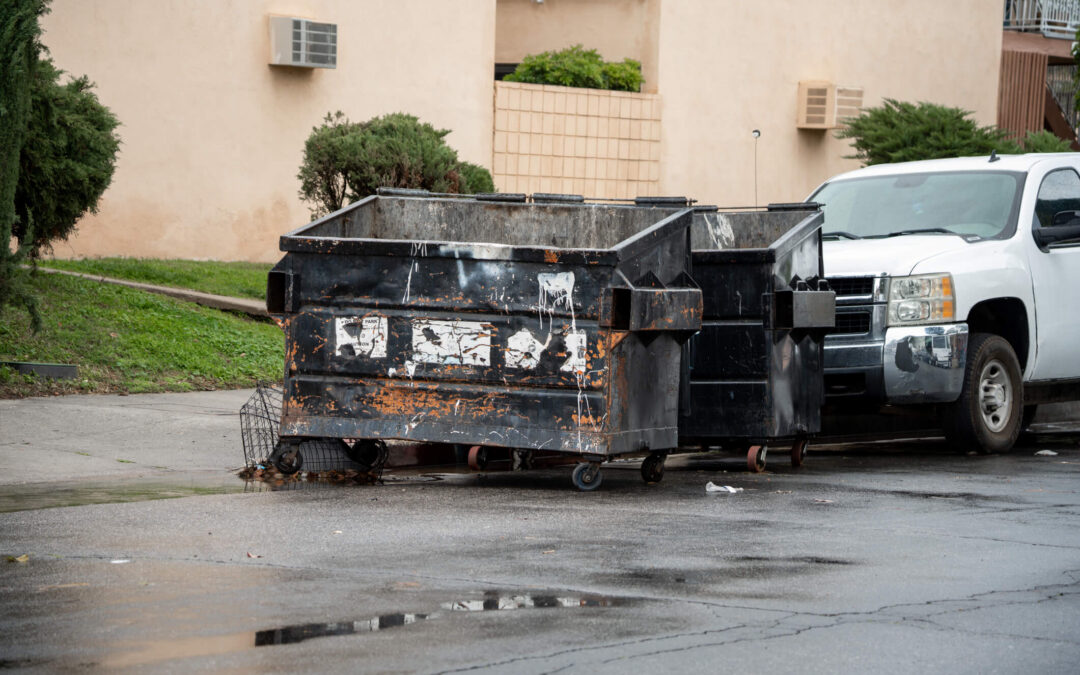
Most people think of a roll-off as a box for the debris they put in it. Through a Southern California winter it is also a very large, very flat rain catcher parked in the driveway, and whatever lands in it leaves with the load.
That matters because weight, not volume, is what ends most roll-off rentals badly. Water adds weight you did not generate and cannot get rid of any other way.
Soaked debris weighs more than the same debris dry
Water is heavy in a way that is hard to picture. The USGS puts the weight of water at 62.366 pounds per cubic foot at 60 degrees, and a 20-yarder holds 540 cubic feet. Even a few inches standing across the floor of a bin runs into hundreds of pounds.
Drywall is the clearest example. Gypsum board drinks water, holds it, and gets dramatically heavier doing it. A bin of dry demo drywall that was comfortably inside its weight allowance can cross the line after one wet week in Granada Hills, without a single extra sheet going in.
Cardboard and old carpet behave the same way. So does yard waste, already damp when it is cut and then sitting in an open container absorbing more. Green waste bound for a composting facility is cheap to handle dry and a different proposition once it is waterlogged.
A 20-yard container tops out around three tons. That covers household debris and roofing shingles generously, and it stops being generous once the load has been rained on twice.
→ 20-yard roll-off dimensions and weight guidance
Dense material behaves differently again. Concrete, brick, dirt and rock belong in the 10-yarder, which exists for exactly that, because on heavy debris the weight limit arrives long before the bin looks full.
→ heavy-material loads and the 10-yarder
Covering the bin is a five-minute job that holds all week
A tarp over the top, weighted at the corners, solves most of this. Not a sheet of plastic held down by a brick at one end, which lifts on the first Valley gust and ends up in the neighbor’s hedge. Bungees through the lifting points, or a few sandbags on the edges, and the cover stays put.
Two habits make the difference. Cover it at the end of every working day, not only when rain is forecast, since forecasts miss. And load the heavy, water-shy material first so it sits under everything else.
There is a second reason to keep the load tidy. Everything has to end up level with the top rail before a container can legally go on the road, so the driver can tarp it for transport. A heaped, soaked load is the one that gets left behind, and a bin that cannot be hauled on the scheduled day is a bin you still have in the driveway on Monday.
→ how pickup, hauling and tarping actually work
Winter changes where the bin should sit, too
Driveway placement already beats the street for most Valley homes, and it matters more between storms. A bin on a slope lets water run through and out; a level pad lets it sit.
Think about what is underneath as well. Saturated soil, soft decomposed granite and the shoulder of an unpaved driveway all give way under a loaded container in a way they never do in August. Plywood under the rollers is cheap insurance on asphalt and genuinely necessary on anything softer.
If the job is an exterior tear-out — fencing, decking, a patio — the material coming out is already wet and already heavy. Sizing up on the first delivery saves a second haul on those jobs, because the weight arrives faster than the volume does.
→ residential roll-off rentals across the Valley
If the bin already has water in it
Do not bail it into the street or the gutter. Water that has been sitting on demolition debris has picked up whatever was in that debris, and the storm drains in Los Angeles County run to the ocean instead of to a treatment plant. Bailing a bin into the gutter creates a stormwater problem with your address on it.
Tarp what is left, let the load dry where it can, and tell us when you call for pickup so the driver knows what is coming. If the forecast is giving you a clear stretch, that is the window to finish the job and get the container off the driveway before the next system arrives.
What a Rained-On Load Costs You
Nothing dramatic happens the first week. What happens is slower and more annoying: the load gets heavier, the pickup gets complicated, and material that would have been recycled cleanly turns into mixed wet waste that has to be handled as rubbish.
Clean green waste is the obvious casualty. Branches, grass and leaves separated out and kept reasonably dry go to a composting facility. The same material swimming in rainwater under a pile of drywall offcuts does not.
So cover it. It takes five minutes a day, and in a wet Valley December it is the single highest-return thing you can do with a rented container.
Our yard: 8629 Bradley Ave. #A, Sun Valley, CA 91352 — BG’s Big Box Service
bgsbigboxservice.com